
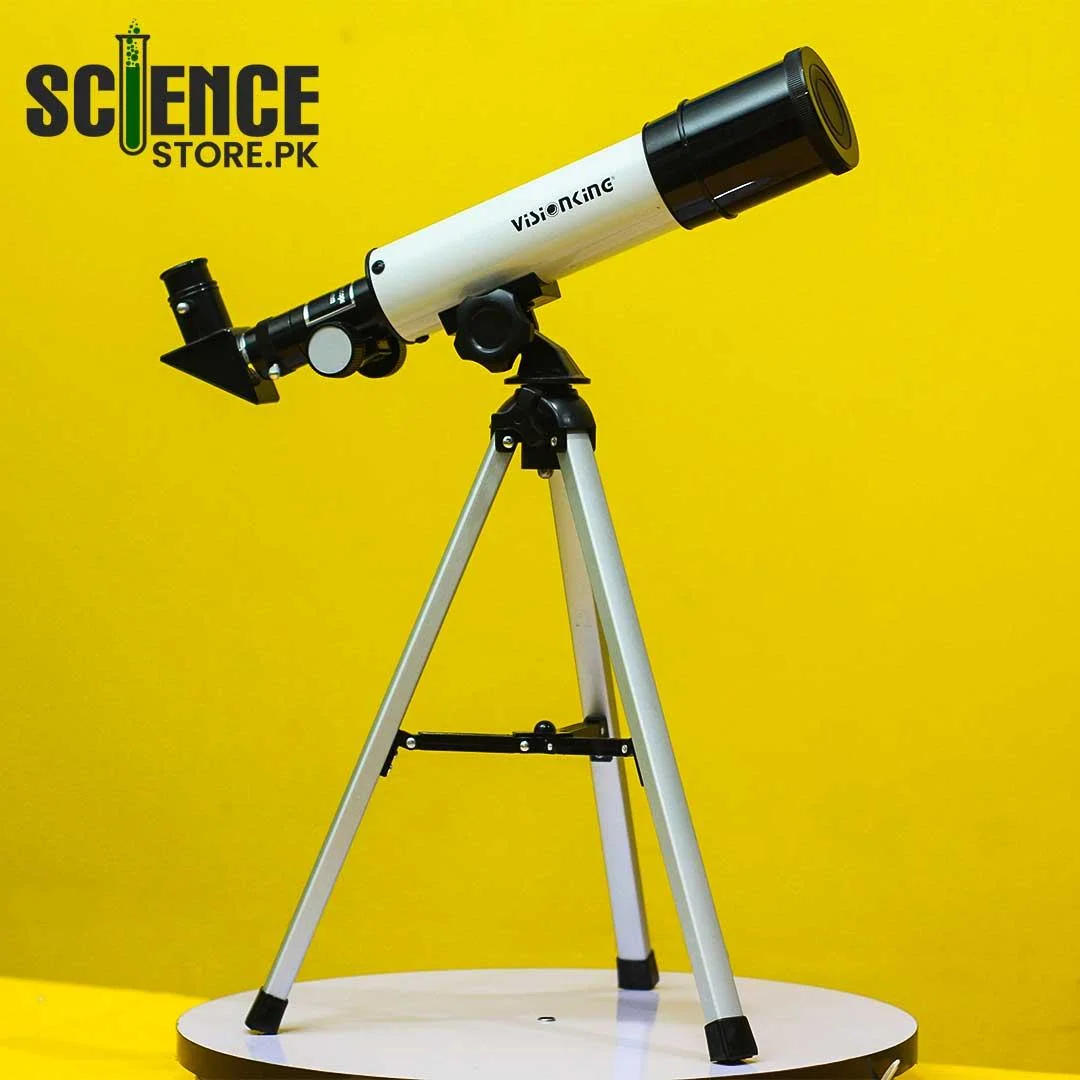
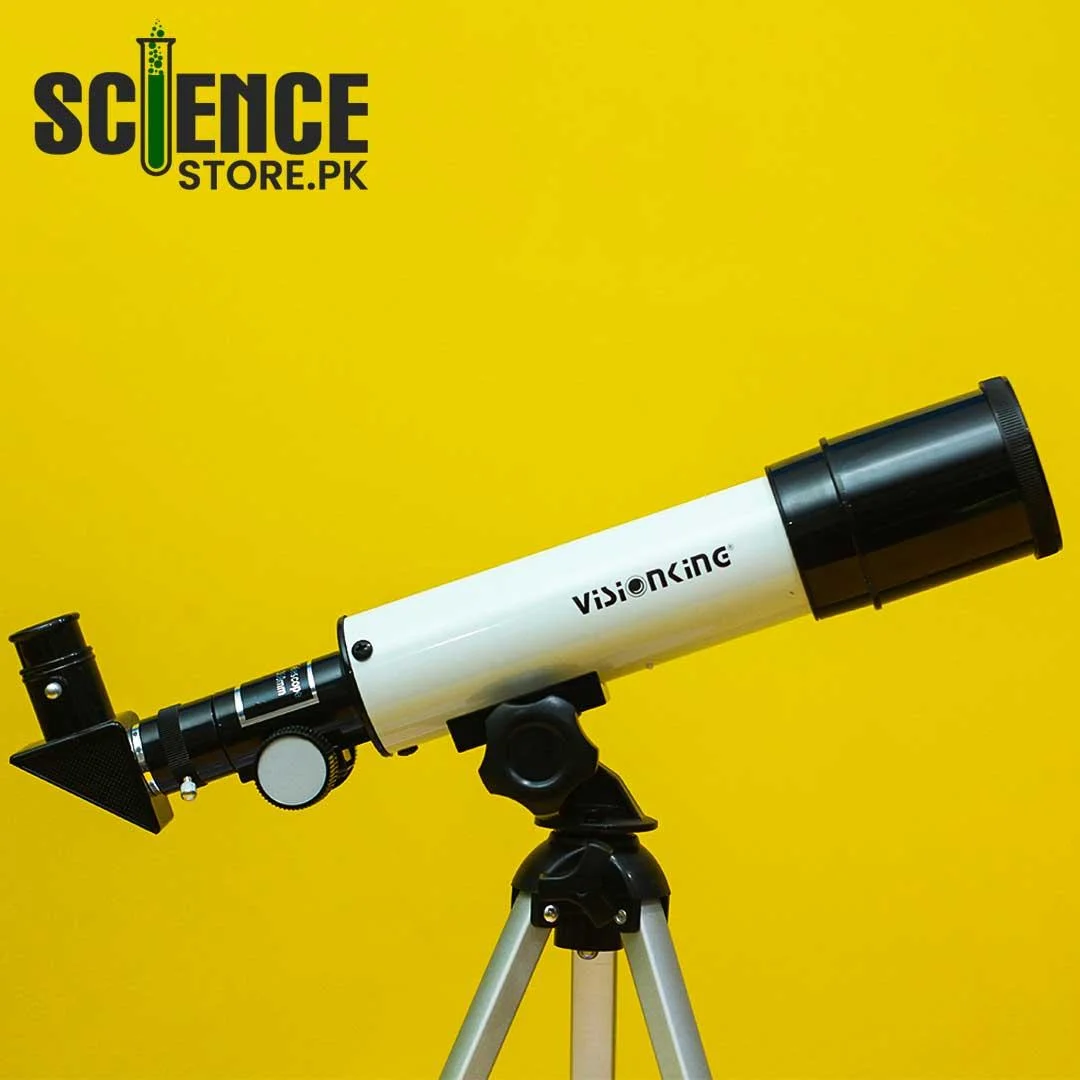
Visionking 50/360 Refractor Telescope
A 50 mm tabletop refractor sold as a first telescope for a child: light, quick to set up, and at its best on the Moon.
Rs 16,000
In stock- Works as a first telescope
- Genuinely portable
- Usable from city skies
- 50 mm Aperture
- 360 mm Focal length
- Refractor Optical design
- Alt-azimuth Mount
- Beginners, Portable Best for
- Beginner Experience level
Where it works best
- Beginner friendly Excellent
- Moon Good
- Planetary Limited
- Deep sky Limited
- Astrophotography Not suitable
- Portability Excellent
- Urban / light-pollution use Good
- School use Limited
What can you see?
Through the eyepiece with this aperture - not processed astrophotography.
- The Moon Good Hundreds of craters, mountain ranges and valleys, most striking along the terminator - the line between lunar day and night, where shadows are longest.
- Jupiter Limited A small disc crossed by two dark cloud belts, and the four Galilean moons - Io, Europa, Ganymede and Callisto - as points of light that change position from night to night.
- Saturn Limited The rings are clearly visible at modest magnification, around 50x, together with Titan, its largest moon, as a faint point nearby.
- Mars Limited A small orange disc. Near a close approach, a white polar cap and dark surface markings may be glimpsed.
| Aperture | 50 mm |
|---|---|
| Focal length | 360 mm |
| Focal ratio | f/7.2 (calculated from aperture and focal length) |
| Optical design | Refractor |
| Mount | Alt-azimuth |
| Tracking | None (manual) |
| GoTo | No |
| Eyepiece barrel | 0.965" (24.5 mm, legacy - very limited accessories) |
| Finder | None |
| Assembled weight | 0.6 kg |
| Recommended experience | Beginner |
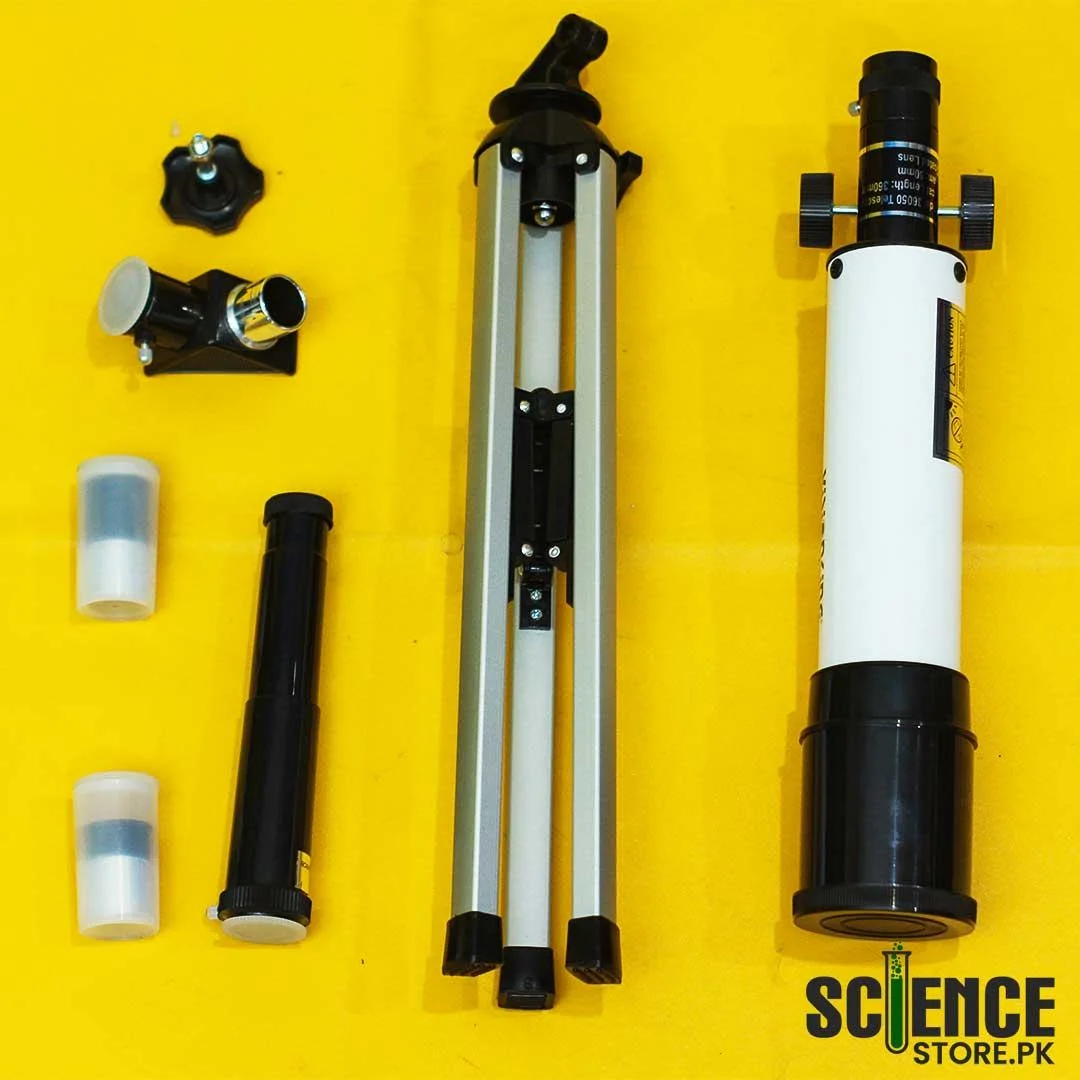
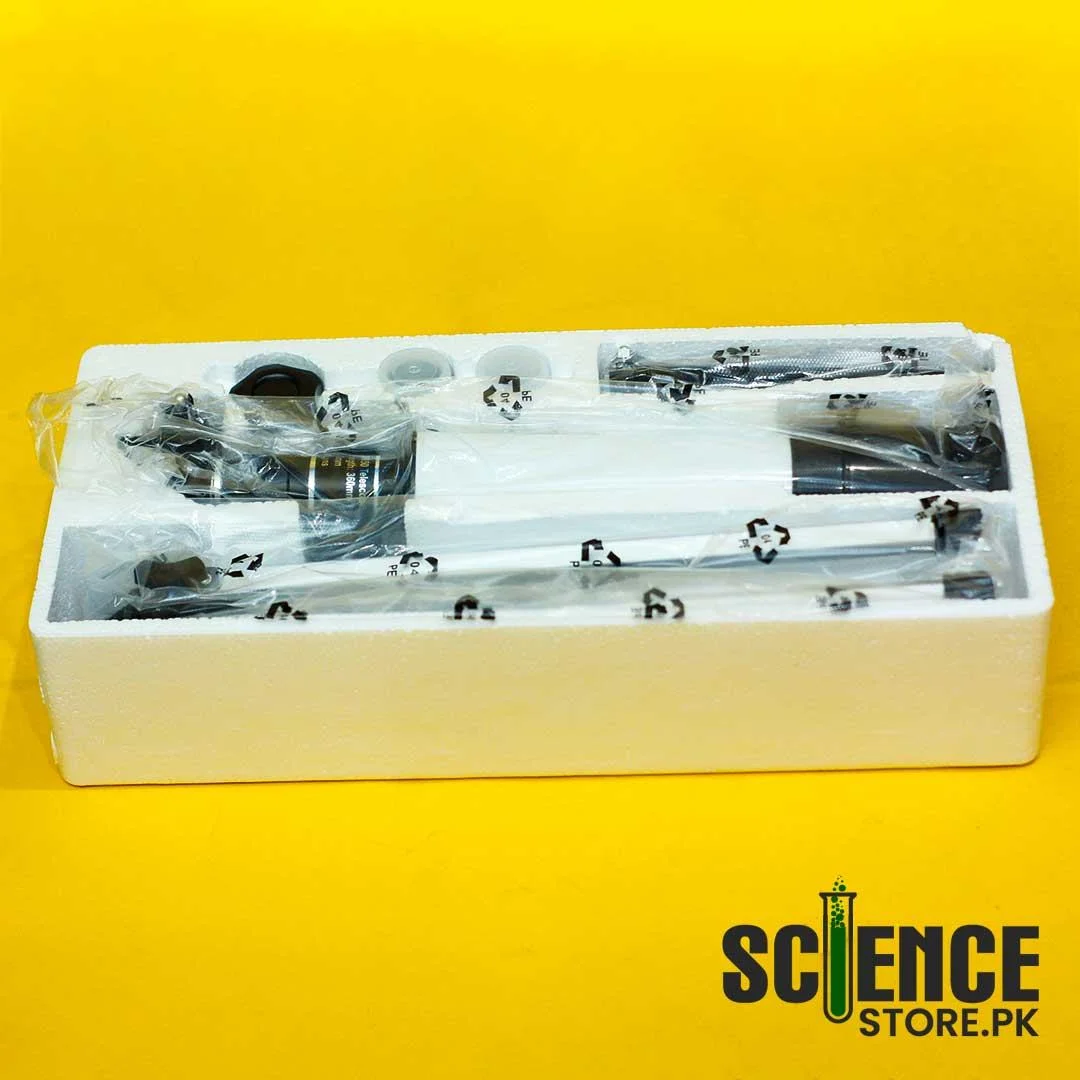
- Visionking F36050M optical tube
- H20 mm eyepiece
- H6 mm eyepiece
- 45 degree erecting prism
- Aluminium tripod
Before you buy
-
Never point it at or near the Sun, and do not leave a child alone with it in daylight. A 50 mm lens concentrates enough sunlight to injure an eye instantly.
-
50 mm is a small lens. The Moon is the reason to own this telescope; the planets stay small and faint deep-sky objects are out of reach.
-
The tripod is 36 cm tall. Stand it on a table, a wall or a flat ledge, not on the ground.
-
There is no finder. You aim by sighting along the tube, which takes a little practice.
-
The 6 mm eyepiece reaches 60x, close to this lens's practical limit. Most of the viewing happens at 18x.
-
No tracking, so objects drift out of view and you nudge the tube by hand.
-
Imported model, supplied without a manufacturer warranty.
Frequently asked questions
What will my child actually see?
The Moon, properly: craters, mountain ranges and long shadows along the line between light and dark. Jupiter as a small bright disc with up to four of its moons beside it as points of light. Saturn at 60x as an oval rather than a ringed planet. Bright star clusters such as the Pleiades at 18x. Galaxies and nebulae are beyond a 50 mm lens.
What age is it for?
It is sold as a children's telescope and is light and simple enough for a child of around eight to handle with an adult nearby. Younger children enjoy it most when an adult does the aiming. The one firm rule at any age is never to point it anywhere near the Sun.
What magnification does it give?
The H20 mm eyepiece gives 18x and the H6 mm gives 60x. Sixty is near the practical limit of a 50 mm lens - usable on the Moon on a steady night, but dimmer and softer. Most of the observing happens at 18x.
Would binoculars be better?
For star clusters and sweeping the Milky Way, a pair of 10x50 binoculars shows as much, with a wider field and nothing to set up. This telescope wins on the Moon, where 18x and 60x show detail binoculars cannot, and it is a telescope - which for a child is often the whole point. Many people end up with both.
Does it need collimation, batteries or a phone?
None of the three. A small refractor holds its alignment, nothing in it is powered, and it is used by eye at the eyepiece.
Will it work from inside a city?
Yes, for what it is good at. Light pollution barely affects the Moon and the bright planets. It is aperture, not the city sky, that puts fainter objects out of reach here.
Full description
The Visionking F36050M is a 50 mm refractor on a short aluminium tripod, sold as a first telescope for a child. The tube is 360 mm long, the whole thing weighs about 600 g, and it goes from its box to the sky in a couple of minutes.
What it is good at is the Moon. At 18x the whole disc sits in the field with the craters along the terminator standing out in relief, and that is a sight that has started a lot of people off in astronomy. It will also show the four bright moons of Jupiter as points of light beside the planet, a handful of bright star clusters such as the Pleiades, and - with the 45 degree prism, which gives an upright image - birds, hills and rooftops during the day.
Be clear about what 50 mm cannot do. It is a small lens. Jupiter stays a small bright disc rather than a banded planet. Saturn at 60x is an oval rather than a ringed world: the rings are what makes the oval, but they are not cleanly separated at this aperture. Galaxies and nebulae are out of reach. This is a telescope for a curious child, not a smaller version of an observing instrument.
About magnification, plainly. Magnification depends on the eyepiece, not on the telescope, and any telescope can be pushed to any number. What limits it is the lens. With a 360 mm focal length, the H20 mm eyepiece gives 18x and the H6 mm gives 60x. Sixty is close to the practical ceiling of a 50 mm lens, and at that power the image is noticeably dimmer and softer - worth using on the Moon on a steady night, not where most of the viewing happens. Expect to spend most evenings at 18x, which is where this telescope looks its best.
Using it is simple. Stand the tripod on a table, a wall or a flat ledge rather than on the ground - it is 36 cm tall, made for a seated child. There is no finder, so aim by sighting along the tube, start with the H20 mm eyepiece, and only change to the H6 mm once the Moon is centred. There is nothing to collimate and no batteries to charge.
One rule matters more than every other: never point this or any telescope at or near the Sun, and do not leave a child alone with it during the day. A 50 mm lens concentrates enough sunlight to cause permanent eye injury in an instant.
This is an imported Visionking telescope, not one of our Made in Pakistan models. If the telescope is for an adult, or for a child who is already serious about astronomy, put the money towards a larger instrument instead - aperture is what decides how much you see, and our Made in Pakistan reflectors start well above this.
Customer reviews
Written by people who bought this from us. Every review is checked before it appears.
No reviews yet. Be the first to review this telescope.
If you own this one, yours would be the most useful thing on the page for the next buyer.