
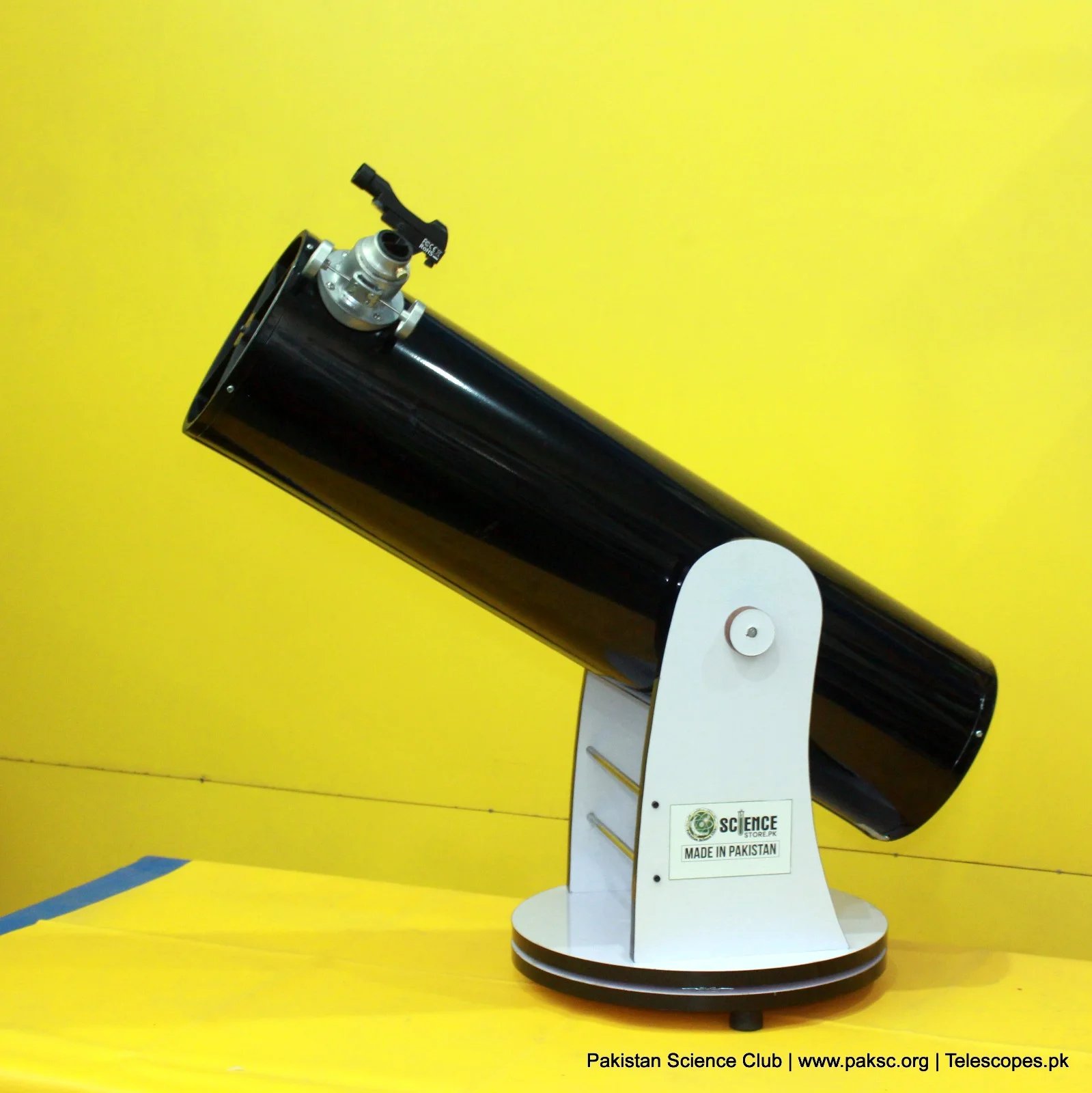
Made in Pakistan
RVision 8-1200 Astronomical Telescope
203 mm · f/5.9 · Newtonian reflector · Dobsonian mount
Rs 195,000
Planet
The largest planet. Its four brightest moons and its cloud belts are within reach of every telescope.
When to look: The months around its opposition, when it is visible most of the night. The date moves later by about a month each year.
Described as seen by eye at the eyepiece, on a clear night. Photographs collect light for minutes or hours and show far more colour and detail.
Planets are bright enough that city lights barely matter. Steady air matters far more.
Little difference for Jupiter; steady air is what counts.
Observing tip: Let the telescope cool outdoors for about 30 minutes and observe when Jupiter is high in the sky. The disc looks small: detail appears in moments of steady air, so keep watching rather than expecting a photograph.
Rated Good or Excellent for planetary observing by our editors.
203 mm · f/5.9 · Newtonian reflector · Dobsonian mount
Rs 195,000
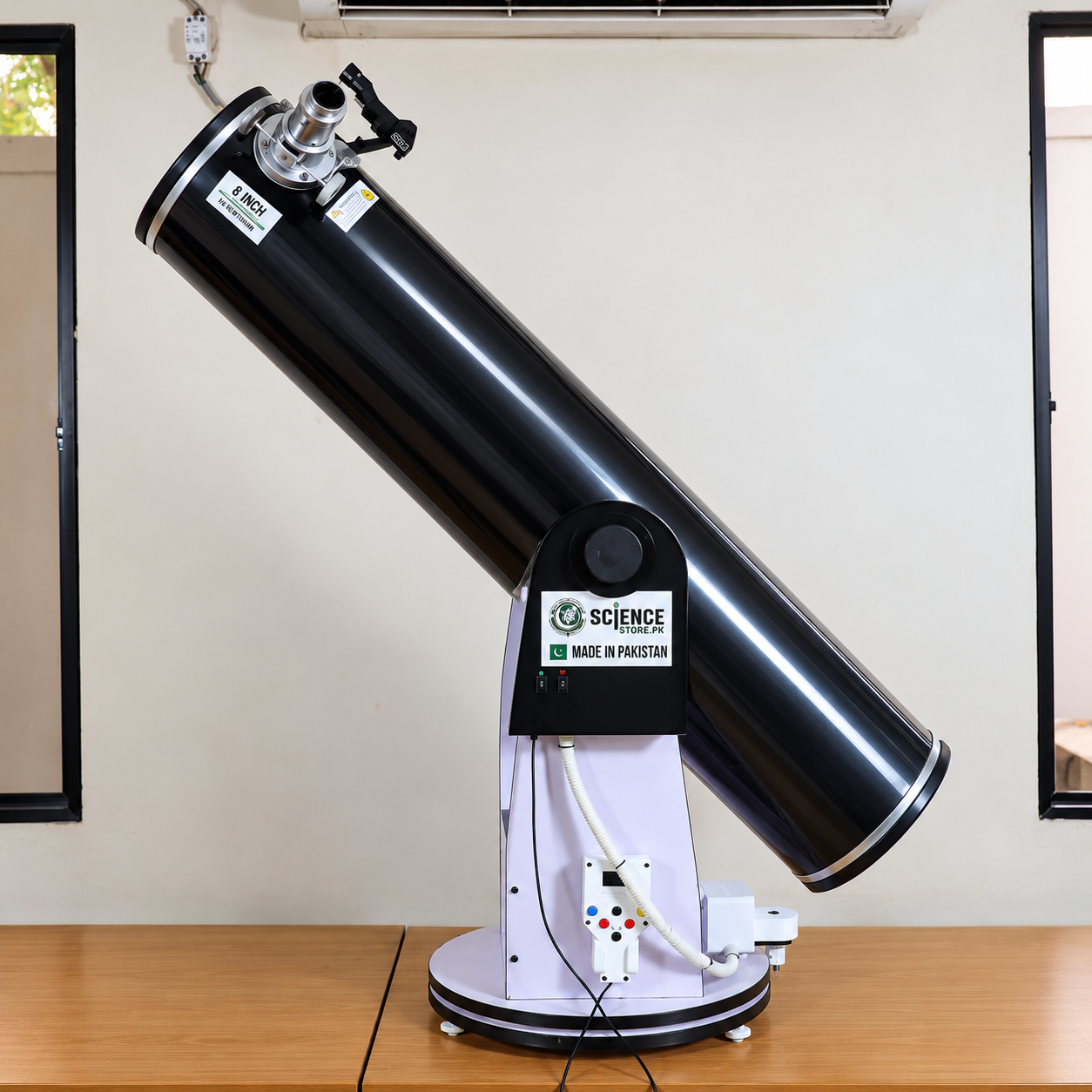
203 mm · f/5.9 · Newtonian reflector · Dobsonian mount · GoTo
Rs 380,000
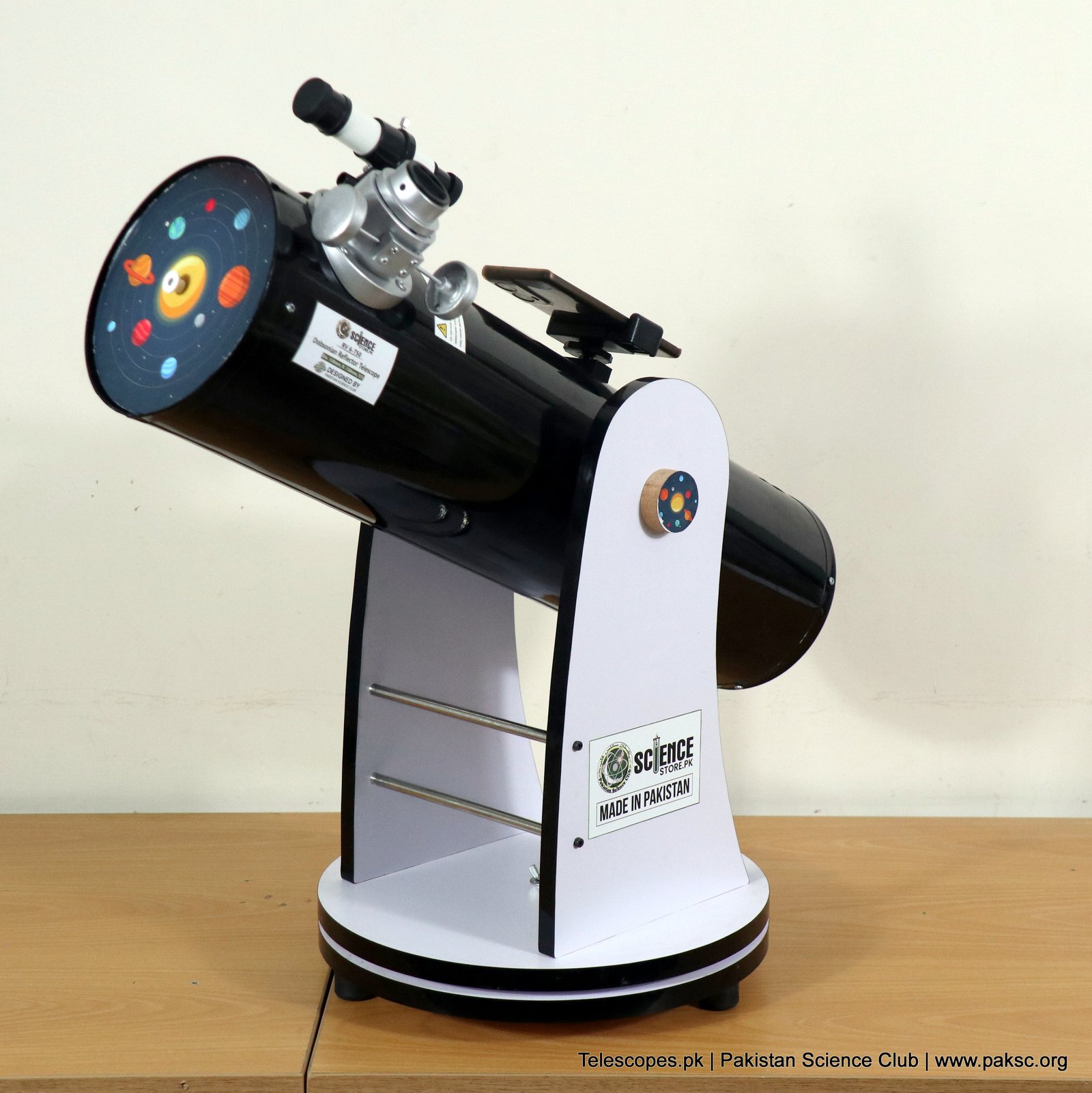
150 mm · f/5.0 · Newtonian reflector · Dobsonian mount
Rs 96,000